Muzzling Kansas students’ speech rights challenges democracy
Across Kansas, lawmakers have advanced a series of policies that directly threaten students’ First Amendment rights — policies that should alarm anyone who cares about democracy, civic participation, and the development of informed citizens. Most recently, the Kansas Senate attached a budget amendm
Across Kansas, lawmakers have advanced a series of policies that directly threaten students’ First Amendment rights — policies that should alarm anyone who cares about democracy, civic participation, and the development of informed citizens.
Most recently, the Kansas Senate attached a budget amendment requiring parental permission for student protests during the school day and imposing steep financial penalties on school districts that “encourage, facilitate, or enable” walkouts.
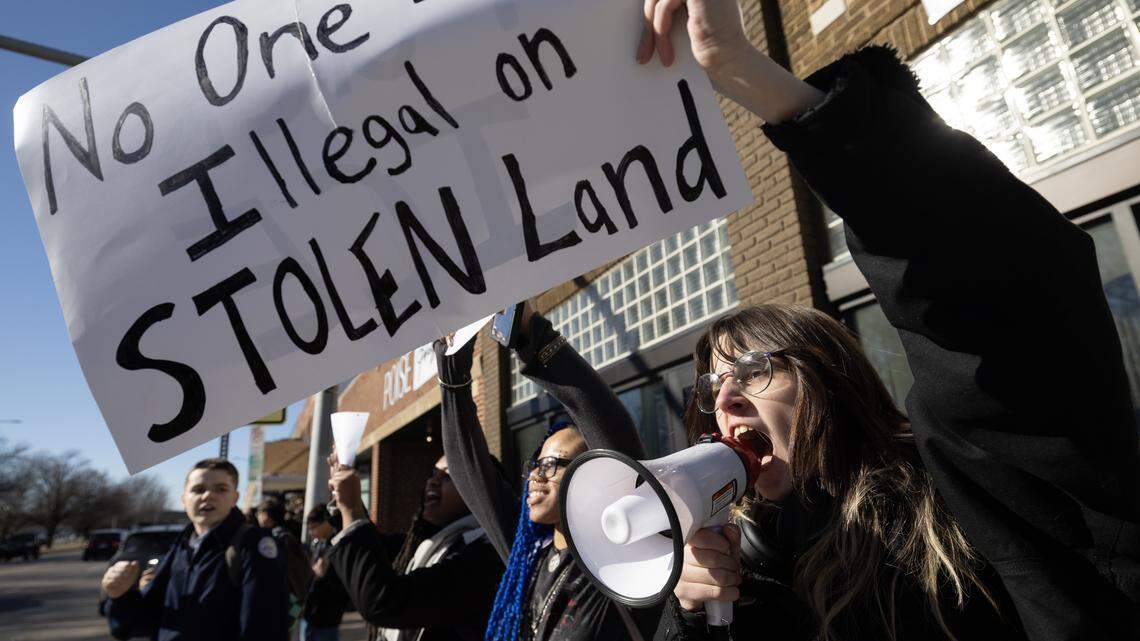
Under this proposal, districts could face fines exceeding $100,000 per day, and any school day that includes a walkout would not count as instructional time.
This is not a minor procedural change; it is an attempt to muzzle student speech by making it too costly for schools to tolerate.
The amendment passed the Senate by a 21–18 vote and is still awaiting reconciliation with the House, but its message is unmistakable: Kansas lawmakers are intentionally designing a policy that discourages young people from exercising their constitutional rights.
The First Amendment does not disappear at the schoolhouse gate.
More than 50 years ago, in Tinker v. Des Moines, the Supreme Court decided that students retain their constitutional rights within public schools. The court made clear that student speech can only be restricted when it causes substantial disruption — certainly not when it merely makes adults uncomfortable.
Yet state officials in Kansas are now advancing restrictions that conflict with this long‑standing precedent, a concern raised repeatedly by civil liberties advocates and legal scholars.
Kansas students know their rights are at stake.
From Lawrence to Wichita to Dodge City, high schoolers have walked out in protest of federal immigration enforcement practices and other pressing issues, demonstrating a willingness to engage civically even before they are eligible to vote. Students have been clear: protest is one of the few avenues they have to make their voices heard. The Legislature should not suppress those voices simply because they are powerful.
This movement to restrict student protest is not new, but it has accelerated. The ACLU of Kansas recently detailed how similar attempts to limit speech have already appeared in districts such as Shawnee Mission, where administrators previously tried to suppress speech related to gun violence and even seized student journalists’ recording devices — actions the district later retreated from after legal challenge.
What is especially troubling is how these new statewide restrictions undermine the very civic values we claim to teach. If our democracy depends on informed, engaged citizens, then suppressing the political speech of young people, particularly those just beginning to find their civic voice, works against every democratic principle we profess to uphold.
Civic engagement is not an extracurricular activity; it is the foundation of democratic life. Students learn democracy by doing democracy.
And that is precisely why these policies are so damaging.
They teach students that authority should not be questioned.
They teach that speech is permissible only when it is convenient to those in power.
They teach compliance, not citizenship.
When lawmakers penalize schools for student protest, they are not protecting learning; they are preventing it.
This moment calls for a clear, collective response. As Kansans, we have a responsibility to defend students’ rights and model the democratic engagement we hope they will inherit.
That means contacting legislators, submitting public comments, and supporting organizations working to protect free expression in our schools. It also means equipping students with the constitutional knowledge, and the confidence, to understand and assert their democratic rights.
Democracy thrives only when its citizens can speak, assemble, and hold those in power accountable.
If Kansas continues down this path of suppressing student protest, we risk raising a generation for whom core democratic values feel theoretical rather than lived. We risk raising subjects, rather than citizens.
Our students deserve better. Democracy demands better.
— Alexandra Middlewood is an associate professor and chair of the Political Science Department at Wichita State University.
Source Verification
Corroboration Score: 1This story was independently reported by 1 sources. Click any source to read the original article.
Comments
0 commentsThings to do in Milwaukee area this weekend, including Home & Garden Show
New movie releases this week in D-FW, opening March 20
Related Articles
 Science
【AICC Original Article】Appreciating the Grand Canal through Rows of Willows: A Time-honored Cultural Pulse Reinvigorated
 Science
One Dead, Three Trapped After Kericho Building Collapses
 Science