Fela Kuti and Ayinla Omowura: Two titans of Nigerian music
In Lagos, Nigeria, a legend was born. Fela Kuti, the towering figure behind Afrobeat and one of Africa’s most influential cultural icons of the 20th century, fused music with militant politics in a career that reshaped Nigeria’s soundscape and challenged its rulers. Known by several nicknames...
In Lagos, Nigeria, a legend was born. Fela Kuti, the towering figure behind Afrobeat and one of Africa’s most influential cultural icons of the 20th century, fused music with militant politics in a career that reshaped Nigeria’s soundscape and challenged its rulers. Known by several nicknames reflecting his influential and controversial persona, Fela’s most famous moniker was Abami Eda, a Yoruba term meaning “The Weird One,” “The Strange One,” or “Supernatural Being.”
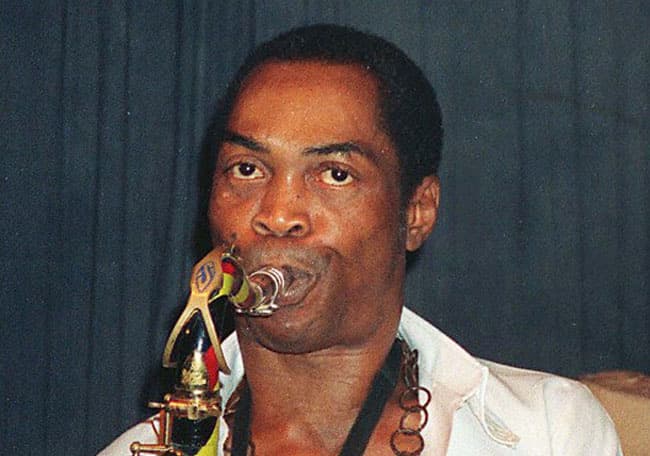
He was also widely known as the Chief Priest and the Black President. Born on October 15, 1938, in Abeokuta to a family steeped in activism, his father was a school principal and union leader, while his mother championed feminism and anti-colonial causes, Fela’s political consciousness was forged early. He studied music at London’s Trinity College of Music, where exposure to jazz and Western classical forms combined with his Yoruba roots to chart a new musical course.
By the 1960s, Fela was experimenting with highlife and jazz. He soon developed Afrobeat, a dense, propulsive fusion that married traditional Yoruba rhythms and percussion with American funk and jazz. The genre was characterized by extended instrumental passages, complex arrangements, and politically charged lyrics.
His band Africa ’70, with Fela as vocalist, saxophonist, and composer, became the principal vehicle for his sound. Fela used music as a platform for unflinching political critique. Songs such as the 1977 hit “Zombie” explicitly lampooned Nigeria’s military rulers, depicting soldiers as mindless automatons.
Other recordings, including Expensive Shit and Coffin for Head of State, confronted corruption, human rights abuses, and the lingering effects of colonialism, drawing both mass support and the ire of successive governments. Over the course of his career, Fela delivered numerous landmark performances. He appeared at the Berliner Jazztage in 1978, where he and Africa 70 showcased their sound to a European audience, and at the Glastonbury Festival in 1984, where he performed “Teacher Don’t Teach Me Nonsense” with Egypt 80.
Other notable shows included his 1984 performance at the Zenith in Paris, his 1971 live collaboration with drummer Ginger Baker, and the ’69 Los Angeles Sessions recorded during a four-month Hollywood residency.
In Lagos, his legendary Sunday Jump and Ladies Night shows at The Shrine drew crowds night after night, while live recordings from Amsterdam in 1983 captured the raw energy of his touring band. Beyond the studio and stage, Fela created physical spaces for resistance. The Kalakuta Republic, his communal Lagos compound, served as home, recording hub, and political headquarters, while The Shrine nightclub hosted marathon performances that blended music, dance, and social commentary.
Both became symbols of defiance and cultural pride for many Nigerians. Fela’s outspokenness made him a repeated target of state repression—arrests, beatings, and censorship were recurrent features of his life.
Nevertheless, his music found audiences far beyond Nigeria. Through tours of Europe and the United States in the 1970s and 1980s, Afrobeat won international recognition and influenced artists across genres from hip-hop to electronic music. Fela Kuti died on August 2, 1997, in Lagos from complications related to AIDS.
His musical and political legacy endures through his children, notably Femi and Seun Kuti, both Afrobeat musicians, through annual Felabration events in Lagos, and through the continued global appreciation of Afrobeat’s sound and message. Ayinla Omowura: The Apala legend Like Fela Kuti, another legend emerged from the Yoruba fraternity. Alhaji Ayinla Omowura was a legendary Nigerian Apala musician known for his raw talent, quick temper, and socially conscious lyrics.
Born in 1933 in Abeokuta, he rose to fame in the 1970s with hits such as “Egungun Be Careful,” blending traditional Yoruba culture with sharp social commentary. Omowura’s life was marked by controversies, including public feuds with musical contemporaries and a turbulent lifestyle involving sharp dressing and frequenting local beer parlours. Tragically, he was killed in 1980 at the age of 47 during a dispute with his manager, Fatai Bayewuni, who struck him with a beer mug, leading to fatal injuries.
Bayewuni was later executed for the crime.
Source Verification
Corroboration Score: 1This story was independently reported by 1 sources. Click any source to read the original article.
Comments
0 commentsRussia increases exports of agricultural products to China through Guangdong province 4% in 2025 to $400 mln - Agroexport
UN chief names Arnault as personal envoy for Middle East war
Related Articles
 Lifestyle
'Age of Attraction' Finale: Which Couples Are Still Together After Netflix Premiere
 Lifestyle
$25m divorce bombshell rocks Chivayo as ex-wife seeks US$40k a month
 Lifestyle