Can Xavier basketball return to glory days in NIL, portal era?
For decades, the formula for Xavier men's basketball was similar to several programs across the country.
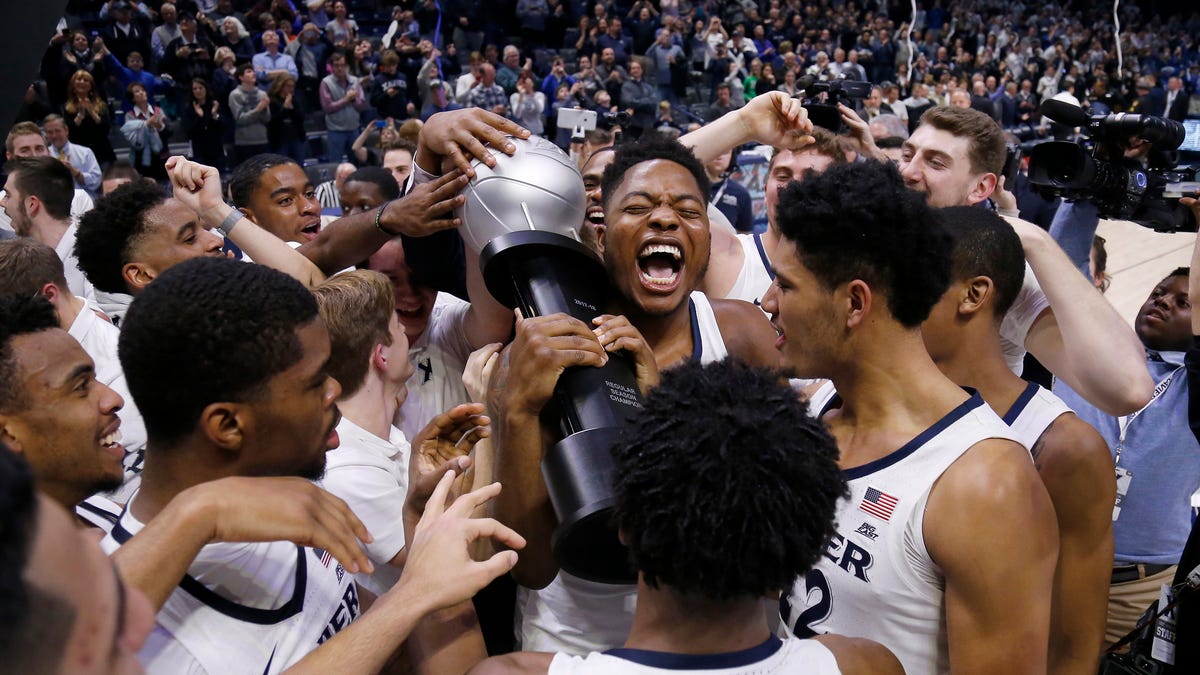
For decades, the formula for Xavier men's basketball was similar to several programs across the country. The remarkably consistent model of recruit, develop and retain produced teams that Xavier fans still talk about and cherish today. These veteran groups grew together over multiple seasons, with players who became household names by the end of their four-year careers with teams capable of making deep March Madness runs.
More: No. 10 Xavier falls to No. 2 UConn in Big East Tournament But in the modern era of Name, Image and Likeness (NIL) and the transfer portal, the economics of building a roster have fundamentally changed. If fans want those kinds of teams again, they may have to confront a new reality. The teams they loved most would cost millions to assemble today. "
An exercise that a high-major general manager told me about," said The Athletic's Brendan Marks. ”
He would ask donors what their favorite team in the history of their program was." For Xavier fans, maybe it was the three NCAA Tournament trips with National Player of the Year David West. Or Elite Eight runs with guys like J.
P. Macura, Trevon Bluiett, Josh Duncan, Drew Lavender, Lionel Chalmers and Romain Sato. "
That Sweet 16 team you love?" Marks said. "
That's a $7 million roster (today). That Final Four team you idolize? That's a $10 million roster." The point lands quickly that college basketball has drastically changed philosophically and financially. The cost to contend The price tag on building a competitive college basketball team has risen dramatically with free agency-style roster movement. "
The teams that are in the band of competitiveness are spending between $8 and $10 million," Marks said. The margin for error is much smaller for programs operating below that level.
According to multiple sources, Xavier was operating this season with an NIL budget around $5.5 million, which would place the program just below the Big East Conference average. That number doesn't make success impossible, but it does make it harder. National college basketball reporter Adam Zagoria said he believes the realistic range for top-tier Big East teams is even higher.
“(UConn head coach) Dan Hurley and (St. John's head coach) Rick Pitino have both talked about a floor. They'd like to see teams spending $9 to $11 million," he said. Marks said: ”
If you look at the Big East this year, you're gonna have maybe three teams in the NCAA Tournament (UConn, St. John's and Villanova). It's the three teams spending at the level that is required in the modern era to be competitive and to make the NCAA Tournament." Coaching matters, too Money alone does not determine outcomes.
It has to be spent wisely, and you have to have the right coach in place. For example, Providence is estimated to have had around $10 million in NIL. The Friars will be looking for a new coach after the school announced it had parted ways with Kim English on March 13. "
Who is running your program? That's the most important part of it and always has been," CBS Sports college basketball analyst Gary Parrish said. ”
If you have a power-conference affiliation and you support those programs in the ways that are now allowed, then yes − sustained success is attainable." Xavier officials believe they have the right coach in Richard Pitino. Despite a roster in transition and a 15-18 record, there were encouraging signs in Pitino's first year after a slow start. "
When I looked at their roster, it was hard to watch," said longtime Sporting News college basketball writer Mike DeCourcy. ”
Yet, they've still managed to compete and win some games. You look at that and say, 'There's something there.' If they can get the right guys, he can win in that league."
Getting the right guys will require resources and Pitino is confident in the school's plan to improve its NIL.
“I know the school is going to step up in a bigger way financially," he said on his podcast this month. Out with the old For Xavier, the old blueprint was built on patience. Marks calls it "slow cooking" talent, when recruits would come in, bide their time while learning the system and then become a starting-caliber player.
For much of the 21st century, that approach worked along Victory Parkway. Between 1996 and 2023, Xavier posted 27 consecutive winning seasons. During that stretch, the Musketeers reached the NCAA Tournament 17 times, including three Elite Eight appearances (2004, 2008 and 2017) and seven trips to the Sweet 16.
They also captured nine regular-season league titles and four conference tournament championships. Those teams were defined by veteran four-year players. That kind of roster continuity is nearly extinct.
There were only 22 high-major scholarship players celebrating Senior Night this season having played at just one place, according to Isaac Trotter of 247Sports. "
In the NIL era, it is incredibly difficult for teams to stockpile talent on their benches," Marks said. "
It's incredibly difficult to keep someone who's not playing when another program might be willing to play him immediately." Players who once waited their turn now have the leverage and financial incentive to leave a program to maximize their career earning potential. The result is constant roster churn.
At the high-major level this season, there were only five seniors who are starters at the same school they were starters at as a freshman: Braden Smith (Purdue), Bruce Thornton (Ohio State), Alex Karaban (UConn), Tamin Lipsey (Iowa State) and Fletcher Loyer (Purdue). In with the new The new model for Xavier, and most college basketball programs, requires something closer to annual reconstruction. General managers now help manage roster contracts, NIL negotiations and portal evaluations.
Coaches communicate with agents months before the transfer portal opens. Pitino said he'd be open to a general manager when he was introduced as Xavier's head coach on April 1, 2025. Retention hasn't disappeared entirely; it's just a smaller piece of the puzzle.
Pitino outlined as much after Xavier's season ended in the Big East Tournament when asked about his roster building philosophy. "
There's three phases to it. There's high school recruiting. That's very, very important. Then there is retention of your current roster, also very important. Then the portal," Pitino said. "
Obviously you can't do it when you inherit no players, but certainly we're going to start that process moving forward." Xavier will likely retain a few pieces from this year's roster. There are eight players with eligibility remaining. Who stays out of that group will shake out over the coming weeks with factors like role, money and chances elsewhere playing a part in those discussions. "
The biggest thing the best teams have in common is their ability to retain their players," CBS Sports' Jon Rothstein said. The days of keeping 9-10 players together for years are largely gone. Now programs must balance high school recruits and returning players with targeted transfers while navigating a rapidly evolving financial market.
Replicating the great teams from Xavier's past requires a larger financial commitment. "
If you want to be in the mix for top talent," Marks said, "you have to play the game.”
Source Verification
Corroboration Score: 1This story was independently reported by 1 sources. Click any source to read the original article.
Comments
0 commentsCan Cincinnati Bearcats be relevant again in college basketball?
2025-26 Men's Sweet 16 Odds: Spread, Lines, What to Know for all 8 Games
Related Articles
 Sports