The Not-So-Simple Truth About Rats, Roaches, and the Other Urban ‘Pests’ We Made
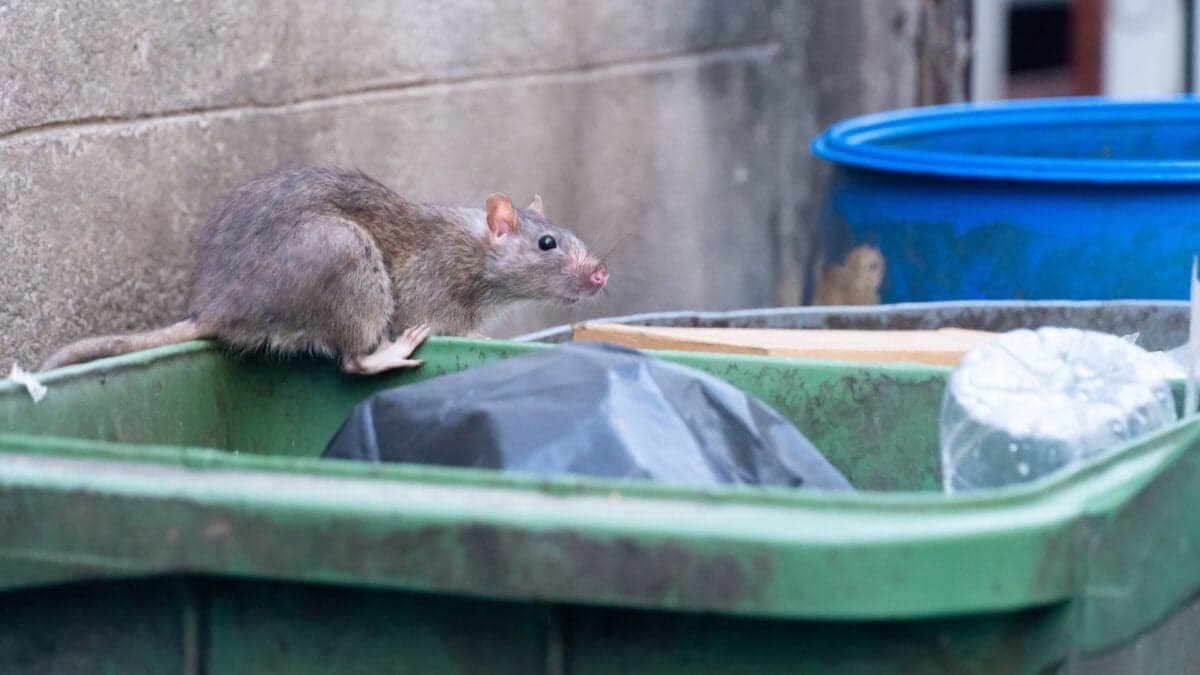
For many people, seeing a rat rooting around the trash in their neighborhood will provoke strong emotions.
For many people, seeing a rat rooting around the trash in their neighborhood will provoke strong emotions. Some might feel fear, others disgust, and lots will express annoyance. Few, however, are likely to feel even a begrudging sense of respect toward them.
That’s something that evolutionary biologist Marlene Zuk hopes to change with her newest book out this month, Outsider Animals: How the Creatures at the Margins of Our Lives Have the Most to Teach Us. Zuk focuses on nine animals that most of us invariably view as pests, or at least nuisances, that disturb our daily routine, from roaches to gulls to coyotes. She details some of the many discoveries that scientists like her have made about these animals, as well as how they’ve succeeded so well at living alongside humanity.
Though Zuk does debunk plenty of villainous tropes about these critters, she’s not interested in convincing people to turn them into cuddly mascots either. Rather, she hopes they can be appreciated on their own terms, as remarkable and unique animals that have carved out a niche where many others haven’t. I spoke to Zuk about why New Yorkers might really hate rats, why these animals don’t need to be our villains or heroes, and about our shared admiration for roachkind.
The following has been lightly edited for clarity and grammar. Ed Cara, Gizmodo: You’ve had a long career studying parasites and other animals that most people would not choose to spend any time around. But what made you want to focus on these particular animals for the book?
Marlene Zuk: I’ve been interested for a long time in why people like the animals they do and what lessons they think they can get from them. When you tell people you study animal behavior, they often come back to you with stories about their pets or they want to know if something they’ve heard about wildlife is true. And so it’s like they’re trying to derive these lessons from what they see animals doing.
The animals in the book, to me, are the animals that get into our lives whether we want to do that with them or not. You just see them in your yard turning over your garbage can. You find them when you go to the beach, like gulls, or when they’re dive-bombing a kid with an ice cream cone.
And I’m interested in how much more there is to those animals than just dismissing them in how they relate to humans. Because a lot of my interest in animals comes from being interested in them as themselves and not as little object lessons. Gizmodo: There’s a lot of fun and interesting stuff you cover in the book.
But the one animal I was most intrigued by reading about was the cockroach. Not only because I’m a born-and-raised New Yorker, but also because I’ve gotten to delve a little into the complex lives they have in my writing, too. Zuk: I’m telling you, we are kindred spirits.
Because that’s totally my favorite chapter. I’m in a writing group in the Twin Cities, and none of the other people in it are scientists, although often they do write about science. And so they were wonderful as I was writing the book.
I gave them all the chapters and got comments back. And when I gave them the cockroach chapter, I said, “Of course you can talk about the writing, and you can tell me what you think I’ve done wrong. But you don’t get to say that you don’t like cockroaches.”
That’s just off the table from the start. You just can’t say that. Gizmodo: So without spoiling everything, what would you say are some of the biggest misconceptions people have about cockroaches?
Zuk: First of all, there is only the cockroach. It turns out there are thousands and thousands and thousands of species. We don’t even know how many because, like most insects, the group is very understudied, and we’re finding new species all the time.
And only a handful of those are actually pests. Many of them live in really interesting places. There are tropical cockroaches.
There are cockroaches that live in rotting wood. There are monogamous cockroaches. There are cockroaches that take care of their babies.
There are cockroaches that give live birth, and so people have been interested in them because of some links to how pregnancy works in mammals. I think there’s just way more to them than you might imagine. And plus, like many of the animals in the book and like many, if not most, of the animals we call pests, cockroaches are the way they are not because of them but because of us.
We’re the ones that created the environment that they find attractive. How can we possibly blame them for finding it attractive? Gizmodo: You hit upon this one theme throughout the book.
But why is it important in your eyes for people to not villainize or even valorize a lot of the animals that you talk about? Zuk: It comes back to what I said at the beginning, which is that animals are not there for us to use as object lessons. I mean, people have been trying to do that forever, of course.
Aesop’s fables are all about what we can learn from the crow and what we can learn from the fox. But animals aren’t there to teach us lessons. They’re on their own terms.
And I think finding out what the animals are actually like helps us understand our world a lot better than interpreting their behavior in terms of our own. Gizmodo: Was there any particular animal that was the most intriguing to find out about? Did that change as you were writing?
Zuk: That is a harder question to answer. Because the book is so divided into the different chapters, with each one having a single species or a single group of species, like with gulls, I had what became a very predictable trajectory. I would start out investigating what I was doing.
If I had scientist friends, and I often did, who worked on the animals, I would call them up and see if they could talk with me, and I’d start reading some more articles. And then what would happen is that as I got to know more and more, it was like I had this little love affair with all of them. I was just all about them every single time.
I will say that the animal that took me the longest to do that with was rats. But I still did! And by the end of the chapter, I was like, oh my god, rats are so amazing.
I don’t know, it might be because I’m not a New Yorker—and I feel for New Yorkers—rats are emblematic of a lot of things in the city. They’re emblematic of a lot of things that are wrong with urban life; they’re emblematic of things that people complain about, about politics and the mayor, and why isn’t anybody doing anything about this? And since I don’t have that common ground, I think I didn’t have the same starting place.
Source Verification
Corroboration Score: 1This story was independently reported by 1 sources. Click any source to read the original article.
Comments
0 commentsGerman Consumer Sentiment To Slide Amid Iran Conflict
Eurozone Private Sector Credit Growth Slows In February
Related Articles
 Science
Thursday Essay: Here Comes Skynet
.jpeg&w=3840&q=75) Science
ScienceNorthland block struggles to heal from ‘shared trauma’ of years-long feud, killing
 Science