ANALYSIS: Five key takeaways from the 2026 Danish election result
According to Rune Stubager, professor of political science at Aarhus University, it isn’t immediately clear who has won. “The result yesterday was rather muddy, it resulted in a fragmented parliament,” he told journalists at a press conference on Wednesday morning. “It’s difficult to see which...
According to Rune Stubager, professor of political science at Aarhus University, it isn’t immediately clear who has won.
“The result yesterday was rather muddy, it resulted in a fragmented parliament,” he told journalists at a press conference on Wednesday morning.
“It’s difficult to see which government will actually be formed and we’re looking at rather prolonged negotiations by Danish standards. Weeks, at least.” The election result was inconclusive.
The so-called ‘red bloc’, made up of the left-wing parties, achieved 84 seats, with the right-wing, ‘blue bloc’, achieving 77. Neither group has a majority alone, rather they will need to collaborate with the non-aligned Moderates, who have 14 seats, if they want to govern. One of the crucial issues, Stubager said, is that despite the fact that either bloc could theoretically get the 90 seats needed for a majority, various parties have set rules on who they will or will not work with in a future government, which makes it impossible for any combination of parties to achieve a majority.
“Parties have made various announcements during the election and in their campaign and they have put up tripwires for themselves,” Stubager said.
“As far as I can see it is not possible to form a government with these tripwires intact.” Essentially, someone is going to have to backtrack to make the numbers work and achieve an agreement that can gather 90 seats. Not clear yet who will be prime minister Will Prime Minister Mette Frederiksen, leader of the Social Democrats, continue on for a third term?
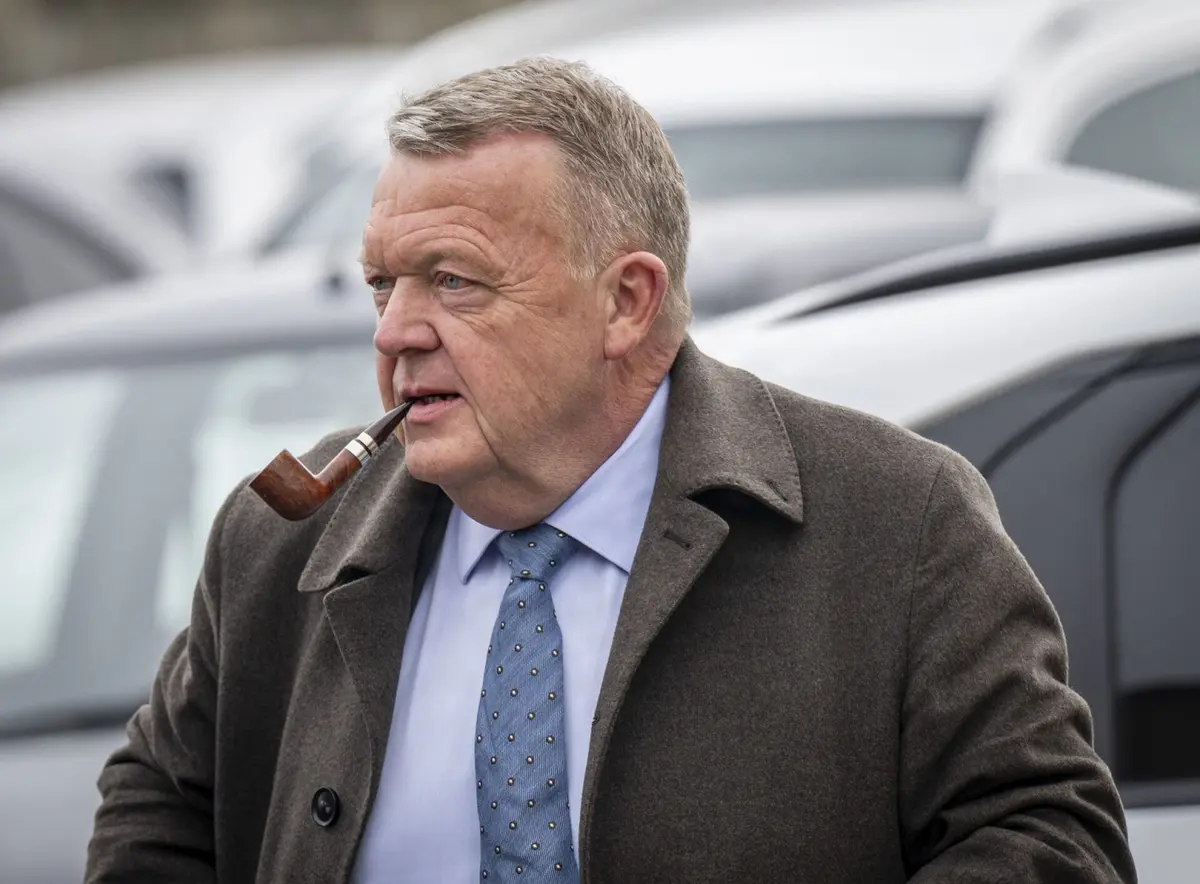
That’s also still not clear. Frederiksen’s outgoing government, which is made up of her Social Democrats (traditionally the leader of the red block), the Liberals (Venstre), who are traditionally the leader of the blue bloc, and the centrist Moderates, led by former Liberal prime minister Lars Løkke Rasmussen, will resign today, Stubager said.
“They no longer have a majority, so they will resign today. Also because the Liberals have said they no longer want to be part of the government.” The parties will go to King Frederik X later today and discuss who should be given the task to form a government.
Frederik is responsible for choosing the kongelig undersøger, a type of informateur role who is tasked with collecting together a large enough group of seats to make a successful government.
Read Also
: What happens next after Danish general election?
“Maybe the party with the most votes – that is the party who most of the other parties indicate as their informateur – could be from the right block, even though the left has more seats,” Stubager said.
“The Red-Green Alliance have said they will not support Mette Frederiksen unless she rules out a centre government, which she will not do yet.”
Despite this, Stubager still thinks a government led by Frederiksen is more likely.
“It’s still not possible to say but if we’re speculating then I think Mette Frederiksen will continue as prime minister. It’s up to negotiations to see whether that’s as the leader of a red-bloc government or a government spanning the centre.” This is due to the fact that the “tripwires”, or boundaries to collaboration, are less flexible in the right-wing bloc, he said.
“The tripwires are so thick on the right side, particularly with the Danish Peoples’ Party ruling out collaboration with Lars Løkke Rasmussen, that it will be dangerous for them to go back on that promise,” he said.
“The same types of wires on the left side are not as thick or solid. We’ll see.” Moderates the only real winner The Moderates, who with their 7.7 percent of the vote are only the sixth largest of the 12 parties in parliament, are the only party who seem to have actually succeeded in Tuesday’s election, despite the fact that they lost two seats and 2.6 percent of their vote share.
“There is only one real winner and that is the Moderates,” Stubager said.
“Even though they lost a few seats they are in a position they really thrive in, and that is the kingmaker. It’s really up to them who they want to support, which government we get. The Social Democrats are open to it, other parties are open to it, but we’ll see.
They need 90 seats and we are maybe short of some.” The two seats they lost, he said, are much fewer than they would have lost if an election was held a few months ago.
“Back in mid-December they had a poll putting them on 1.5 percent of the vote, under the threshold [for parliamentary representation, ed.], and now they are back at more than 7 percent, which is actually a gigantic turnaround for them.” Stubager added that there are two key explanations for this.
“The first is Donald Trump and the stage he set around the issue of Greenland which Lars Løkke Rasmussen as Foreign Minister was able to perform on. He is, as of today, the one member of parliament with the longest record as a member of parliament, as prime minister and foreign minister, and he is a skilful politician. He was able to show that to voters.”
Rasmussen is also a skilled campaigner, Stubager said.
“This campaign left him as pretty much the only person able to assume the role of the voice of reason arguing that the other parties should come together and find agreement across the centre. This idea appeals to Danish voters, they generally like that idea. They might not like the policies that come afterwards though.”
Comeback of Danish People’s Party not necessarily a new far-right surge The far-right Danish People’s Party also had a successful election tripling their voter share after near-annihilation in 2022.
“They are back now, which they deservedly celebrated last night,” Stubager said.
“If you look at this in a wider perspective though this is not a sign that Danish voters have moved to the right on these issues. Over the years, the immigration-sceptic parties have polled at around 13 to 17 percent and we’re still at that level if you combine the three far-right parties, the Danish People’s Party, the Denmark Democrats and the Citizens’ Party. ”
The New Right party [now-defunct far right party Nye Borgerlige, ed.] completely collapsed after 2022 and the Danish People’s Party have taken over a lot of their votes. So support for the immigration-sceptic parties is pretty much at the same level it has been at over the past few decades.” Despite all this, it’s still unlikely there will be a new election Denmark’s parties have a few difficult weeks of negotiations ahead, but Stubager ultimately expects the result to end up in some form of functioning government.
“We had real snap elections in the 70s and 80s, it’s not that it couldn't happen again but it’s more likely that we would see some government being formed. Maybe it would break down shortly after. They will probably negotiate something they will try and stick to.”
This might not necessarily be a majority government, he added.
“We have a long, proud tradition in Denmark of minority governments. That’s sort of the standard we have, in a sense the outgoing government is the exception.
Source Verification
Corroboration Score: 1This story was independently reported by 1 sources. Click any source to read the original article.
Comments
0 commentsNational Police Commissioner Fannie Masemola to be charged over ‘Cat’ Matlala’s R360m tender
Day 1,491 of WW3: Russian soldier claims that, in retaliation for being conscripted and sent into combat despite being a student, he passed the location of his unit to Ukraine, resulting in 150 KIA. This is your Wednesday Ukraine War thread [News]
Related Articles
![Day 1,491 of WW3: Russian soldier claims that, in retaliation for being conscripted and sent into combat despite being a student, he passed the location of his unit to Ukraine, resulting in 150 KIA. This is your Wednesday Ukraine War thread [News]](/_next/image?url=https%3A%2F%2Fusrimg-full.fark.net%2Fo%2Fox%2Ffark_oxpKoL9fVYDQTCZeIPDt4mY5oFM.jpg%3FAWSAccessKeyId%3DJO3ELGV4BGLFW7Y3EZXN%26Expires%3D1774843200%26Signature%3DrHv%252FlA8rSt26zv1dIrwS01wYIaA%253D&w=3840&q=75) Science
ScienceDay 1,491 of WW3: Russian soldier claims that, in retaliation for being conscripted and sent into combat despite being a student, he passed the location of his unit to Ukraine, resulting in 150 KIA. This is your Wednesday Ukraine War thread [News]
 Science
National Police Commissioner Fannie Masemola to be charged over ‘Cat’ Matlala’s R360m tender
 Science