The Reckoning Kaduna Demands – Nasir El-Rufai must face justice; not as a matter of politics, but as a matter of law -By Nnamdi Prince
I have been in courtrooms. I have sat in the galleries of proceedings where the evidence was thin, the charges confused, and justice itself was the casualty. That is not what we are discussing today. What we are discussing today is a record so vast, so documented, so corroborated by judges, victims,...
I have been in courtrooms. I have sat in the galleries of proceedings where the evidence was thin, the charges confused, and justice itself was the casualty. That is not what we are discussing today.
What we are discussing today is a record so vast, so documented, so corroborated by judges, victims, journalists, and human rights bodies, that the only question remaining is not whether Nasir Ahmad El-Rufai committed human rights abuses during his tenure as Governor of Kaduna State. The question is when the state will summon the moral courage to say so in a court of law. El-Rufai left office in May 2023.
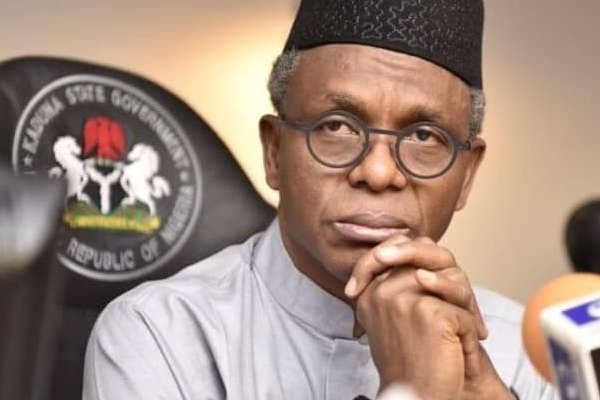
He left behind a state with over 100 communities decimated in Southern Kaduna, thousands of demolished homes, tens of thousands of workers stripped of their livelihoods without due process, journalists and activists who fled into internal exile, and at least one government critic who has not been seen since the night of August 2, 2019. His name is Abubakar Idris , known to Nigerians as ‘Dadiyata.’ August 2026 will mark seven years since his abduction from his home in Barnawa, Kaduna.
His wife has been interviewed. His phone records exist. His car was driven away in the night by his abductors and never recovered.
He was a lecturer and social media commentator whose only documented crime was criticising the governor. There are those who will say: these are allegations. I invite them to examine the record.
We need not speculate about El-Rufai’s character. The courts have already spoken. In 2017, an Abuja High Court ordered El-Rufai’s government to pay Audu Maikori , founder of Chocolate City, a lawyer and civil rights campaigner , N40 million in damages for his unlawful arrest and detention.
El-Rufai refused to pay. The Court of Appeal affirmed the ruling in 2020, reducing the award to N10.5 million. El-Rufai refused again.
He then personally pushed the case to the Supreme Court, where it remains pending. A man who seeks the protection of courts while openly defying their judgments is not a man who believes in the rule of law. He is a man who believes in the rule of himself.
Maikori, who has spoken extensively about his ordeal, put it plainly: he who comes to equity must come with clean hands. The same government that sent plainclothes operatives to Port Harcourt to abduct activist Steven Kefas , without an arrest warrant, seizing his phones so he could make no calls, directing police officers not to permit him contact with the outside world , that same government now complains when the legal system is applied to it. Kefas spent 162 days in detention without bail.
His crime, according to the charge sheet, was social media criticism of the governor. He was released only because the news of his abduction had spread before his captors could make him disappear in the manner of Dadiyata. These are not allegations pulled from opposition press releases.
These are court documents, recorded testimonies, and reports by bodies including Amnesty International, the Committee to Protect Journalists, Human Rights Watch, and the Nigerian Bar Association, which took the extraordinary step of withdrawing an invitation to El-Rufai to address their 2020 national conference, citing his record of human rights violations and contempt for judicial orders. There is a category of accusation graver than contempt of court or unlawful arrest. It concerns the people of Southern Kaduna , predominantly Christian, predominantly indigenous , who endured years of what the Middle Belt Forum, International Christian Concern, and multiple civil society groups have described as ethnic and religious targeting under El-Rufai’s watch.
In 2019, without verification by the police, without producing bodies, without conducting an investigation, El-Rufai announced on national television the deaths of over 130 Fulani in Kajuru. The Commissioner of Police said the facts had not been confirmed. The National Emergency Management Agency (NEMA) issued a warning against spreading unverified figures.
Senator Danjuma Laah, representing Southern Kaduna, publicly protested. El-Rufai ignored them all and repeated the figures. What followed, predictably, was a wave of reprisal attacks on Adara Christian communities.
Nine Adara elders were subsequently arrested and held for 143 days, without bail, without charge. The case was eventually dropped for lack of evidence. The contrast with his own conduct over Audu Maikori’s tweet, for which Maikori apologised, retracted, and presented himself voluntarily at a police station, is staggering.
When a critic made an error and corrected it, El-Rufai sent agents to abduct him. When El-Rufai himself published figures that inflamed communal violence and refused to retract them, nine men paid with five months of their lives.
Fr. Williams Kaura Abba, coordinator of the Coalition against Kajuru Killings, did not mince words. He accused El-Rufai directly of colluding in attacks against Christian communities , a charge transmitted to Aid to the Church in Need and entered into international human rights documentation.
This is not editorial opinion. It is testimony from a man of God watching his flock being slaughtered and naming, on the record, the man he holds responsible. El-Rufai’s suppression of dissent was not the improvised cruelty of a man under pressure.
It was systematic. It targeted journalists. It targeted activists.
It targeted academics. It targeted traditional rulers , some of whom lost their thrones. It targeted workers who had given their careers to public service and were dismissed by the tens of thousands, many without severance pay, many for what observers described as politically motivated reasons.
Luka Binniyat, a journalist and Kaduna bureau chief of Vanguard newspaper, was dragged before a court on charges of cyberstalking after reporting on the massacre of Christians in Southern Kaduna. His article described how state commissioner Samuel Aruwan had characterised the mass killing of 38 Christians in Madamai , slaughtered by armed Fulani herdsmen in September 2021, as a mere ‘clash.’ Binniyat told the press he feared for his life.
Human rights lawyer Nina Shea stated plainly that El-Rufai had ‘abjectly failed in his primary responsibility to protect every citizen in his state.’ The record also includes: the demolition of Gbagyi Villa , 3,500 homes, 40 churches, 16 schools , in defiance of a court injunction, with eight people reportedly killed in the final demolition exercise conducted 72 hours before El-Rufai’s tenure ended. The demolition of Durbar Hotel while a case was still pending in court.
A Kaduna High Court eventually ruled the demolition illegal. The damage, of course, was already done. The demolition of the Barnawa shopping complex.
The revocation of land belonging to Alhaji Umar Karaje at Dankande Industrial Area, also in violation of a court order. This pattern goes back further still: a 2008 Senate Committee on FCT found that El-Rufai, as Minister, had violated multiple court orders in demolishing properties in Abuja. He is not a man who accidentally fell foul of legal process.
He is a man with a lifelong habit of regarding court orders as suggestions, applicable to others. Section 308 of the Nigerian Constitution protected El-Rufai from personal civil or criminal proceedings while he served as governor. That immunity has been gone since May 2023.
Source Verification
Corroboration Score: 1This story was independently reported by 1 sources. Click any source to read the original article.
Comments
0 commentsIf you live in drought-prone areas of the US, you can live like an astronaut, at least when it comes to drinking water [Obvious]
Shettima to Fintiri: You’re no stranger in APC’s mission to build Nigeria
Related Articles
 Politics