Sabarimala Temple Row: Devaswom Board Tells SC It Supports Ban On Women Entry, Says 'Matter of Faith and Tradition'
Ahead of the April 7 hearing before a nine-judge Constitution Bench of the Supreme Court, the Travancore Devaswom Board (TDB), one of the most powerful temple bodies in Kerala, has filed written submissions opposing the entry of women of all age groups into the Sabarimala temple.
HV
Harish V Nair
via Harish V Nair
Updated 1h ago
Ahead of the April 7 hearing before a nine-judge Constitution Bench of the Supreme Court, the Travancore Devaswom Board (TDB), one of the most powerful temple bodies in Kerala, has filed written submissions opposing the entry of women of all age groups into the Sabarimala temple. The Board, which manages over 1,000 temples in the state, has taken a position against the Supreme Court’s 2018 verdict that had allowed women of all ages to enter and worship at the hill shrine.,The Board’s present stand is that existing customs and traditions should be preserved, and it has adopted a position “aligned with the sentiments of devotees”. In its written submissions filed through Advocate-on-Record P S Sudheer, senior advocate Abhishek Manu Singhvi stated, ”
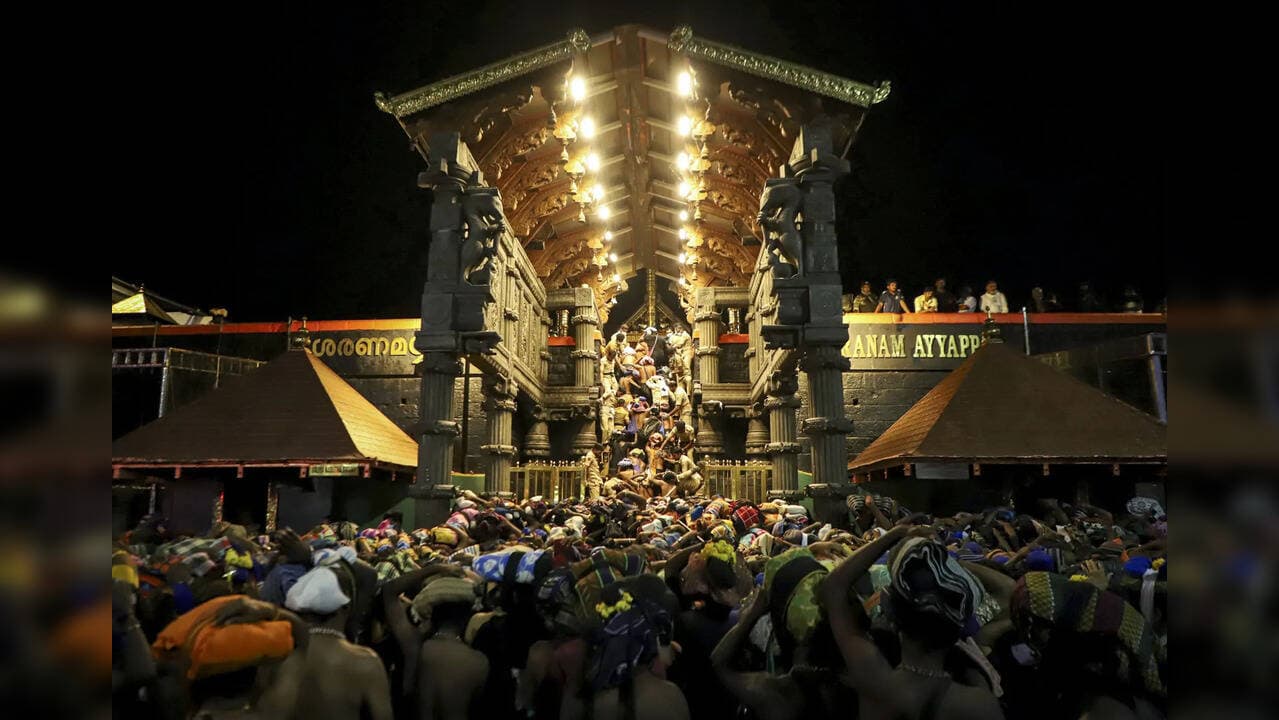
Sabarimala is a denominational temple and is entitled to manage its “own affairs in matters of religion” under article 26(2)(b) of the constitution of india”.,The submission further emphasised, "
Articles 25 and 26 of the constitution protect a very broad arc of religion and religious matters including ceremonial issues, rituals, entry, dress, how to stand, how to worship etc, all as elements of religion”., ,Referring to the nature of the temple and its deity, the Board said, “Although there are innumerable Ayyappa Temples in India (approx 1000), the Sabarimala Temple is supposed to depict “Naishtika Brahmacharya” viz. a perennial brahmachariya (celibate student); his great powers deriving specifically from his ascetic endeavours, in particular from abstention from sexual activities, a practice also followed by pilgrims before and during the pilgrimage to Sabarimala”.,At the same time, the TDB noted that “question whether a group or a sect constitutes a religious denomination is a mixed question of law and fact and can be decided by a Court only after examination of documentary and oral evidence”.,The written submissions highlight the unique religious character of Lord Ayyappa, the autonomy of religious denominations, and historical evidence supporting the celibate nature of the deity. It also underscores the constitutional right to preserve customs and traditions., ,The Board’s stand is expected to have political ramifications ahead of the Kerala Assembly elections, particularly in light of long-standing demands from influential Hindu organisations such as the Nair Service Society (NSS) and the Sree Narayana Dharma Paripalana Yogam (SNDP), which have called for preserving Sabarimala traditions, including restrictions on the entry of women of childbearing age.,Meanwhile, the Kerala government has recently shifted from its earlier position of actively supporting women’s entry to adopting a more cautious and neutral stance. In an affidavit filed in March 2026, the government said any decision on the temple’s long-standing customs should follow wide consultations with religious scholars and social reformers, while maintaining that it is not explicitly supporting or opposing the issue and is deferring to the sentiments of devotees.,For the Latest news, India News and breaking stories from around the world, visit Times Now for live coverage and in-depth reporting.
Source Verification
Corroboration Score: 1This story was independently reported by 1 sources. Click any source to read the original article.
Comments
0 commentsBe respectful and constructive.
Loading comments...