‘A Tragic Moment for Our Nation’: UK Catholic Leaders Condemn Up-to-Birth Abortion Vote
LONDON — Catholic bishops in England and Wales have decried a House of Lords vote on Wednesday evening that effectively decriminalizes abortion up to birth. Archbishop John Sherrington of Liverpool, the lead bishop for life issues, called the vote “deeply distressing” and warned it is “likely to le
LONDON — Catholic bishops in England and Wales have decried a House of Lords vote on Wednesday evening that effectively decriminalizes abortion up to birth. Archbishop John Sherrington of Liverpool, the lead bishop for life issues, called the vote “deeply distressing” and warned it is “likely to lead to more late‑term abortions, putting pregnant women and their babies at risk.”
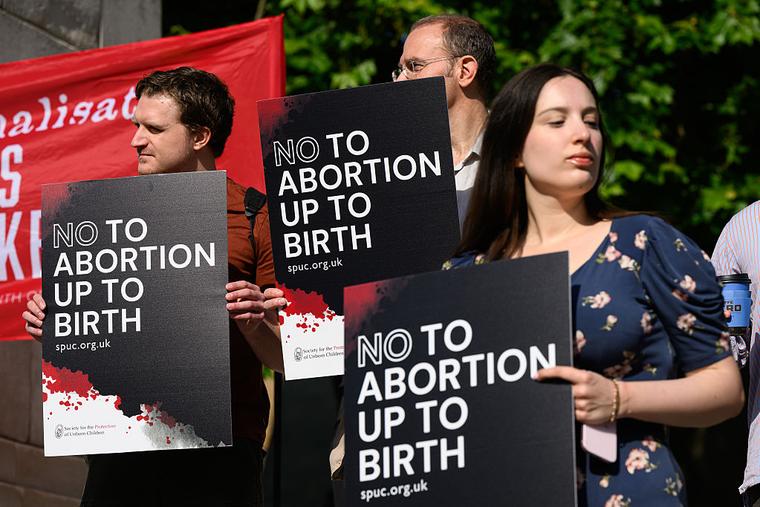
He added that many women may now face “even greater risks of isolation, coercion, and pressure.” A statement from the Archdiocese of Southwark called it “a devastating moment for our country,” with its archbishop, John Wilson, saying it was “a truly tragic moment for our nation.” He wondered how such “frightening legislation” has “any place in a civilized society.”
We can never underestimate the challenges that women and men face when making difficult decisions, Archbishop Wilson continued, but added there is “another life involved which is now to be ignored and silenced. There are also serious concerns for the safety of women.” Liam Gibson of the John Paul II Academy for Human Life and the Family told the Register March 19, “It would be difficult to overstate the gruesome reality that will result” from Wednesday’s vote, and predicted it will “usher in ever-increasing levels of violence towards the most vulnerable in our society.”
Members of the House of Lords voted 185-148 against an amendment tabled by Catholic peer Baroness Rosa Monckton of Dallington Forest to overturn Clause 208 of the Crime and Policing Bill. That clause, originally tabled by Labour MP Tonia Antoniazzi and pushed through the House of Commons last June, removes women from the criminal law in relation to their own pregnancies. It means a woman would commit no criminal offense if she procured or performed an abortion on herself at any point during her pregnancy, even though doctors and/or third parties remain liable to prosecution by the Abortion Act 1967, and related provisions.
Under the current law, women under 10 weeks pregnant may legally take abortion pills at home, provided they have been prescribed. This home‑use provision was introduced in March 2020, when the government relaxed the regulations during the first Covid‑19 lockdown to permit medical abortions after a telephone or video consultation. Baroness Monckton’s amendment would have specifically removed Clause 208 from the bill, thereby preserving the existing criminal protections for viable unborn children, and preventing what she warned would be late‑term, disability‑selective and sex‑selective abortions that are now being facilitated by the woman’s blanket decriminalization. ‘Terrifying Proposition’ In a newspaper article last month, Monckton warned that the legislation was a “terrifying proposition” and a “barbaric step” that would expose vulnerable women to coercive late‑term abortions at home without medical supervision.
She also criticized the way it was rushed through Parliament without evidence or consultation, calling it a reckless and radical change with grave implications for both mothers and unborn children. Gibson pointed out that the House of Lords also voted on Wednesday “to pardon all women who had previously been convicted of an illegal abortion and rejected a proposal to make it a criminal offence to obtain abortion drugs through deception.” He agreed that the legislation would incentivize unsafe abortions, something that the 1967 Abortion Act that legalized abortion was meant to prevent, according to its proponents.
In March 19 comments to the Register, Baroness Monckton, who has a daughter with Down syndrome, said she was “profoundly sad but not surprised” by the Lords vote, adding that although a “handful of Labour peers voted with me, in general they were under considerable pressure to follow through the clause that received overwhelming support from Labour MPs in the House of Commons.” Baroness Philippa Stroud of Fulham tabled a separate amendment to reinstate in-person consultations with a medical professional prior to an abortion taking place at home. It would ensure, before abortion pills are prescribed, that any health risks are assessed and there was no “risk of coercion.”
This was also rejected by peers by a vote of 191-119. The new Archbishop of Canterbury, Sarah Mullally, who, like other Anglican bishops, is a member of the House of Lords, opposed Clause 208 and supported the Monckton and Stroud amendments.
“Balancing justice and mercy is the challenge we are debating today,” she said.
“I do not think that women who act in relation to their own pregnancies should be prosecuted; but I also do not wish to see any increase in late-term abortions. And I fear that while Clause 208 is well intentioned, it risks making an already imperfect situation worse.” The leader of the Church of England has supported abortion in the past, writing in 2012 that she described herself as “pro-choice rather than pro-life.”
She has since said abortion is a complex issue and that she now supports the church’s “principled opposition to abortion.” Bishop Sherrington of Liverpool expressed his gratitude to parliamentarians and advocates “who have worked courageously to protect mothers and their unborn children from this move,” adding that organizations helping mothers facing unexpected pregnancies to keep their unborn children is “more urgent than ever.”
“As we prepare to face this challenge, I encourage the faithful to support them in practical ways, including through prayer,” he said.
“Inspired by the example of the Holy Family, let us continue to defend the dignity of both the child in the womb and the mother.” The bishops of England and Wales announced on Thursday a Holy Hour on April 19 to pray for the promotion of a culture of life. Out of Step With the Majority Right to Life UK, a pro-life advocacy group, highlighted polling showing that “only 1% of women support introducing abortion up to birth,” with the same polling showing that “60% of the general population and 70% of women want to see our abortion time limit lowered to 20 weeks or below.”
Observers say such polling points to the abortion lobby, the media and the majority of legislators being out of step with the majority of UK citizens on the issue. Similarly, Baroness Monckton told the Register she did not think Wednesday’s vote signified a general trend away from supporting the right to life in the UK.
“From what I can tell, most people, if asked, would have supported my amendment, but that is not a scientific assessment,” she said, adding that the majority of those who had contacted her about the legislation “had no idea” about the late-term abortion clause and “were appalled by it.” Part of the reason for many not knowing about the legislation may be due to the fact that hardly any of the UK media reported on it both before and after yesterday’s vote, with few of the UK’s national newspapers carrying the story on Thursday.
In its report, the BBC portrayed the existing safeguards as out of date due to a 164-year-old Victorian law and referred to its own “investigation into the unprecedented number of women enduring criminal investigations.” The Crime and Policing Bill has not yet been given Royal Assent (formal approval by the monarch), and now returns to the House of Commons for any final changes.
Source Verification
Corroboration Score: 1This story was independently reported by 1 sources. Click any source to read the original article.
Comments
0 commentsEuropean Markets Close Sharply Lower On Middle East War Worries
A vendor prepares traditional pheni (fried vermicelli) at his shop as demand increases ahead of Eidul Fitr
Related Articles
Lukashenko pardons 250 convicts after talks with Trump's special envoy
 Politics
ABC7, USC to host California gubernatorial debate on March 24
 Politics