This northern, Victorian hospital is the first place in the world that could change the future for babies like Billy
Looming towers, dark red brick punctuated with black window frames, Gothic spires.
Looming towers, dark red brick punctuated with black window frames, Gothic spires. An imposing Victorian stalwart that has dominated this northern city centre street since 1869. It’s enough to make the most regular hospital visitor shift nervously in their shoes.
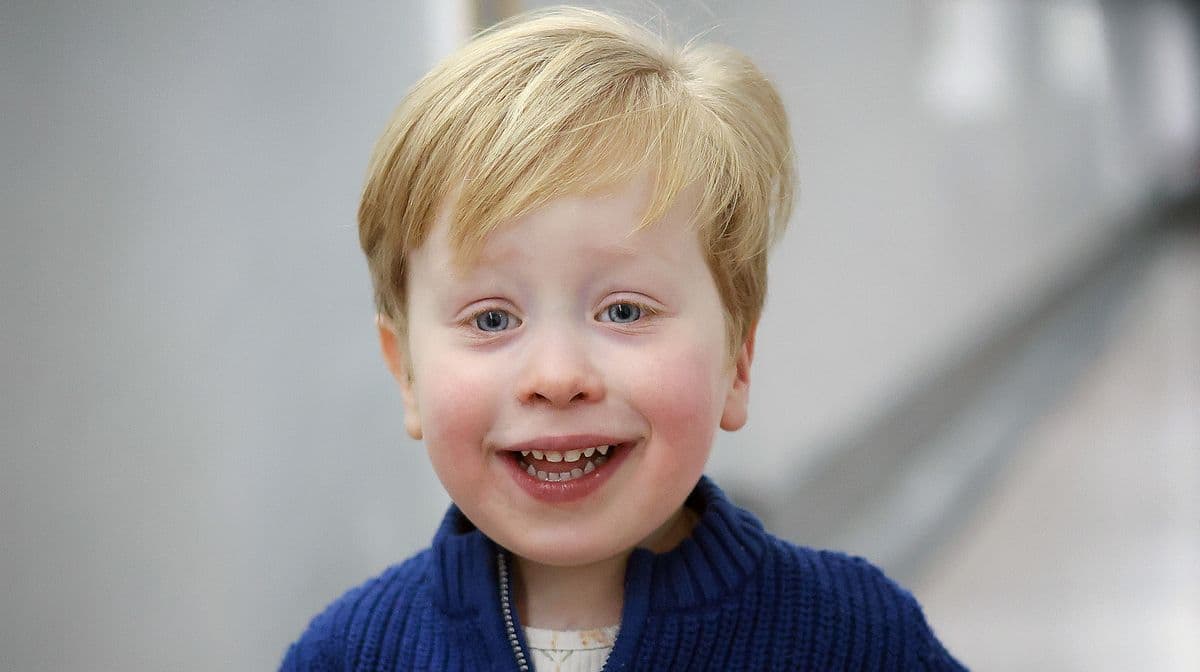
Yet, for most of those people, they walk through the wood-panelled doors with a pit in their stomachs more vast than their surroundings could ever confer. They are the parents and loved ones of fragile newborns in their first day of life, some extremely premature; weeks-old little ones struggling to cling on in the midst of complex heart conditions; babies who have battled terrifying odds for months. But this is the only place in the whole world that uses a certain method of testing that can change the future of these little ones, and give doctors and parents crucial information they need to save these babies.
Get MEN Premium now for just £1 HERE – or get involved in our WhatsApp group by clicking HERE . And don't miss out on our brilliant selection of newsletters HERE. Here at Leeds Children's Hospital, consultant in paediatric cardiology Dr Malenka Bissell and her team have found a way of giving MRI scans to these most high risk babies, without any sedation or contrast agents, substances that help blood vessels ‘light up’ on the results. .
They use a baby MRI incubator, a pioneering advancement that allows babies too fragile to undergo regular MRI and CT scans to be imaged. The baby is wrapped in a thin blanket with cameras built in and placed into the warm incubator, which is then sent through an MRI machine. Other countries, including in the United States and areas of Scandinavia, do MRI scan babies with the incubator.
But Dr Bissell’s team is unique in the world in giving babies these scans while the baby sleeps naturally.
“I was very interested in the sickest of babies, our high risk programme. I was looking for ways of how to reduce their risk of dying,” Dr Bissell told the Manchester Evening News .
“We had some babies that couldn't actually go through the MRI scanner [if we used general anaesthetic] because they were so sick that, once they had gone to sleep, they weren’t stable enough to have the MRI scan.
“I was very keen to find options of how we could image them while awake, because they do it for the brain. I decided that it must be possible to do it without contrast and without giving any sedation for the heart.
“In the world, we are now the only centre that does that routinely without contrast and sedation. We’re doing a version that is completely hands off and as natural as possible.
“We've now given MRIs to over 100 babies. What we find is that the MRI can alert us to problems, probably about one or two weeks before we see any changes on the ultrasound scans.
“It really helps me to understand where the blood flows, how quickly the blood flows, how much it goes where.
“It really helps to tailor medical treatment, and more detailed surgical planning. More importantly, I can predict any problems that may arise, so I'm in a much better position to tell my intervention team when they go and have their catheter – wires put into the babies hearts – if they're going to encounter any problems, and if we need to consider any procedures as part of that.
“As soon as the baby is born, we can scan. There are quite a few babies that we have scanned on day one of life to help with our decision making.” Thanks to the numbers provided by the MRI, for some babies, Dr Bissell could prove their hearts were strong enough to support life-changing surgeries.
“The difference is having a near normal life expectancy versus living to 20 at most,” she said.
“Those are the kind of decisions that we have been able to make.” Firstly, Dr Bissell worked with MRI manufacturer Siemens to cut down the length of a scan from almost two hours to just half an hour. Then she used years of expertise – both as a doctor and as a mother herself – to curate an experience for parents and babies that encourages babies to fall asleep naturally.
By connecting with and understanding her patients and their families, she honed a routine. Parents feed their babies when they arrive for the appointment to make them sleepy, wrap them up cosily, and wheel them up and down the corridor. Then comes music, played at a loud level to match the noise of the MRI machine.
The doctor has learned that it’s not the volume that keeps the babies awake, but the stop-start of the machine that disturbs them. Often, Dr Bissell plays her ‘magic CD’, filled with her native German lullabies. She joked that she’s never known a baby who didn’t ease off into a lovely slumber to this music – apart from her own daughter.
Sometimes, she also plays Disney music or, for families of Muslim faith, the Quran, whatever will make them feel most at rest. Once the babies are nearly asleep, the babies get noise-cancelling headphones and are go into the MRI room, where the lights are dimmed. And the scan goes ahead.
Advances like this are vital for families like the Silvers. When they were expecting their first child, mum Charlotte and dad Joe thought the pregnancy was going just fine. But, ‘as soon as he was born, it was obvious there was a problem’, Charlotte told the M. E.
N. These new parents could never have imagined that their little boy, Billy, would arrive five-and-a-half weeks early in October 2023, in an emergency C-section, with an undiagnosed heart condition. Billy was born with pulmonary atresia with intact ventricular septum, a rare and critical congenital heart defect. In the womb, Billy’s pulmonary artery didn't open, so there was no blood flow to the bottom right ventricle of his heart.
“It was like doing a constant bicep curl, but nothing moving through it,” Charlotte shared.
“He built up a lot of muscle, so it was extremely small.” Billy was born at a general hospital close to their Harrogate home, needing an urgent transfer to a specialist hospital equipped to deal with his complex condition.
“He was emergency transferred, luckily, to Leeds which is down the road from us,” said Charlotte. Billy was meant to be three-and-a-half kilos before his first open heart surgery, but everything changed when he went into cardiac arrest. When he had the operation in an emergency, ‘he wasn’t even two-and-a-half kilos’.
The first operation had to perforate the pulmonary artery to try and get the blood flowing,” shared Charlotte. In another heartbreaking turn, it failed.
“We didn't know if he was going to die or not,” added Billy’s dad.
“If this was the only chance we're going to have to care for him, then we had to do it – it wasn’t giving him milk, or giving him a bath, wrapping him up, and sending him to bed like it normally is – it was changing a tube.
Source Verification
Corroboration Score: 1This story was independently reported by 1 sources. Click any source to read the original article.
Comments
0 commentsA New Astrological Year Has Started! Here Is What The Spring Equinox Means For Every Zodiac Sign
The improved battery-powered Starlink Mini is here
Related Articles
&w=3840&q=75) Health
Health'Go to Iran': The 3-word ultimatum from General Asim Munir that is tearing Pakistan apart
 Health
Zydus Launches Semaglutide Injection in an Innovative, Reusable Multi-Dose Pen Device in India
 Health