5,600 cancer cases in Kampala spark urgent action
The data has become the foundation for a new partnership between Kampala Capital City Authority (KCCA) and the City Cancer Challenge Foundation (C/Can), a global network supporting cities to strengthen cancer care systems using evidence and local data.
The data has become the foundation for a new partnership between Kampala Capital City Authority (KCCA) and the City Cancer Challenge Foundation (C/Can), a global network supporting cities to strengthen cancer care systems using evidence and local data. Kampala now becomes the 18th city globally and the sixth in Africa to join the initiative, signalling a shift toward urban-led responses to cancer, particularly in rapidly growing cities where disease burden is rising fastest. (Courtesy photo) _________________At least 5,600 new cancer cases were recorded in Kampala in 2024, a stark figure that is now shaping how Uganda’s capital plans to confront one of its fastest-growing public health challenges.
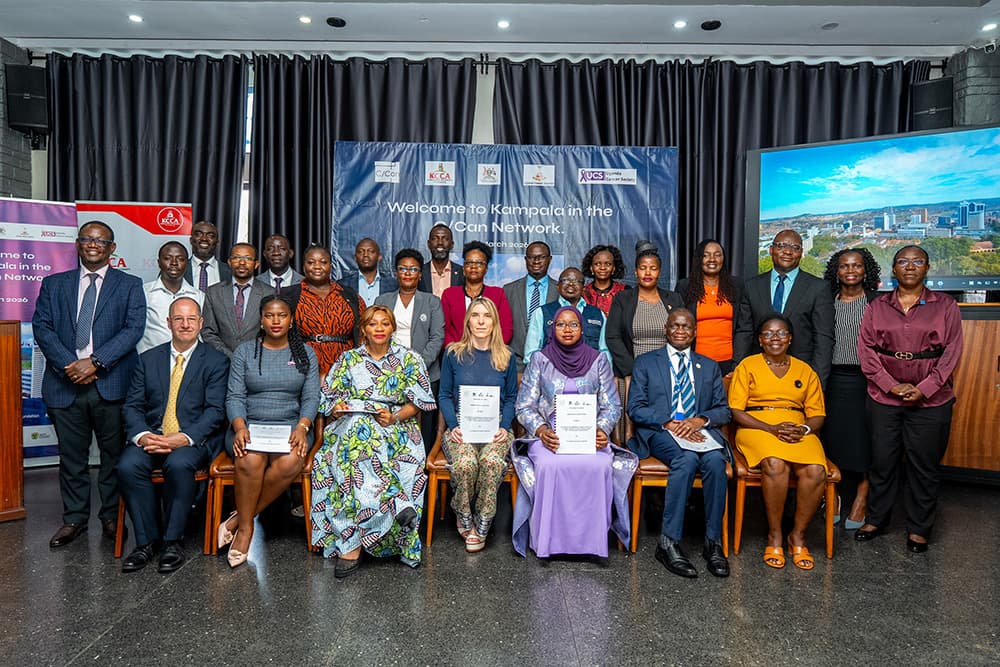
The data has become the foundation for a new partnership between Kampala Capital City Authority (KCCA) and the City Cancer Challenge Foundation (C/Can), a global network supporting cities to strengthen cancer care systems using evidence and local data.
At a launch event held at Fairway Boutique Hotel, city leaders and C/Can officials signed a five-year agreement to improve how cancer is detected, diagnosed and treated across Kampala with data-driven planning at its core.
Kampala city leaders and C/Can officials signed a five-year agreement to improve how cancer is detected, diagnosed and treated across Kampala with data-driven planning at its core. (Courtesy photo)Kampala now becomes the 18th city globally and the sixth in Africa to join the initiative, signalling a shift toward urban-led responses to cancer, particularly in rapidly growing cities where disease burden is rising fastest.
“This is about being clear on why this project starts here. Kampala is the referral hub for cancer care in Uganda. If we get it right here, we strengthen the entire country’s response,” said KCCA Executive Director Sharifah Buzeki.
The 5,600 cases recorded in the city portray a wider national burden, with Uganda registering an estimated 35,000 new cancer cases annually. Cervical and prostate cancers remain among the most common in Kampala, highlighting persistent gaps in prevention and early detection, especially for women.
Health officials said the numbers are not just statistics, but a warning that late diagnosis continues to drive avoidable deaths.“There is no reason to lose a life to cancer when we can prevent it,” Buzeki said, calling for stronger screening programs and public awareness. “Let us not make a cancer diagnosis a sentence of despair.”
Under the C/Can model, data will be used to map gaps across the entire care system from delayed diagnosis to limited treatment capacity and weak palliative care services. The goal is to ensure that decisions on infrastructure, workforce and medicine supply are guided by evidence rather than guesswork.
“Cancer is complex, and that means we need data, strong systems and collaboration. No single institution can solve it alone,” said Isabel Mestres, CEO of the City Cancer Challenge.
The partnership brings together city authorities, health institutions and international partners to build what officials describe as a systems-based approach linking prevention, diagnosis, treatment and end-of-life care into one coordinated response.
Ugandan health leaders promised that the initiative will reinforce ongoing national efforts led by institutions such as the Uganda Cancer Institute, which continues to face growing demand from across the country.
KCCA Executive Director Sharifah Buzeki. (Courtesy photo)“The fight against cancer is always a group fight you cannot fight it alone,” said Jackson Orem, Executive Director of the institute.
Some improvements tied to city-level coordination are already visible, including infrastructure upgrades around the institute to protect sensitive equipment and support expansion of treatment services.
Advocates also see the partnership as an opportunity to close equity gaps in access to care. Patience Asiimwe of the Uganda Cancer Society described the initiative as a step toward ensuring that more patients regardless of income can access treatment and palliative care.
At the community level, officials said the data points to an urgent need to scale up screening and awareness campaigns, particularly for cervical cancer, which remains one of the leading causes of death among women in Kampala.“This is a critical issue that can be prevented at an early stage, but many people don’t know,” said public health specialist Sarah Zalwango.
Source Verification
Corroboration Score: 1This story was independently reported by 1 sources. Click any source to read the original article.
Comments
0 commentsNet Zero Activists Stumped By Shock New Evidence Showing No Link Between CO2 & Temperature Over Last Three Million Years
UN Appoints Senior Envoy To Spearhead Middle East Peace Efforts
Related Articles
 Health
UK govt denies cover-up after PM ex-aide's phone is stolen
A new supplement combines vitamin C, vitamin D, and zinc in one capsule
 Health