Budget Debate: Holness touts new approach to unlocking urban renewal
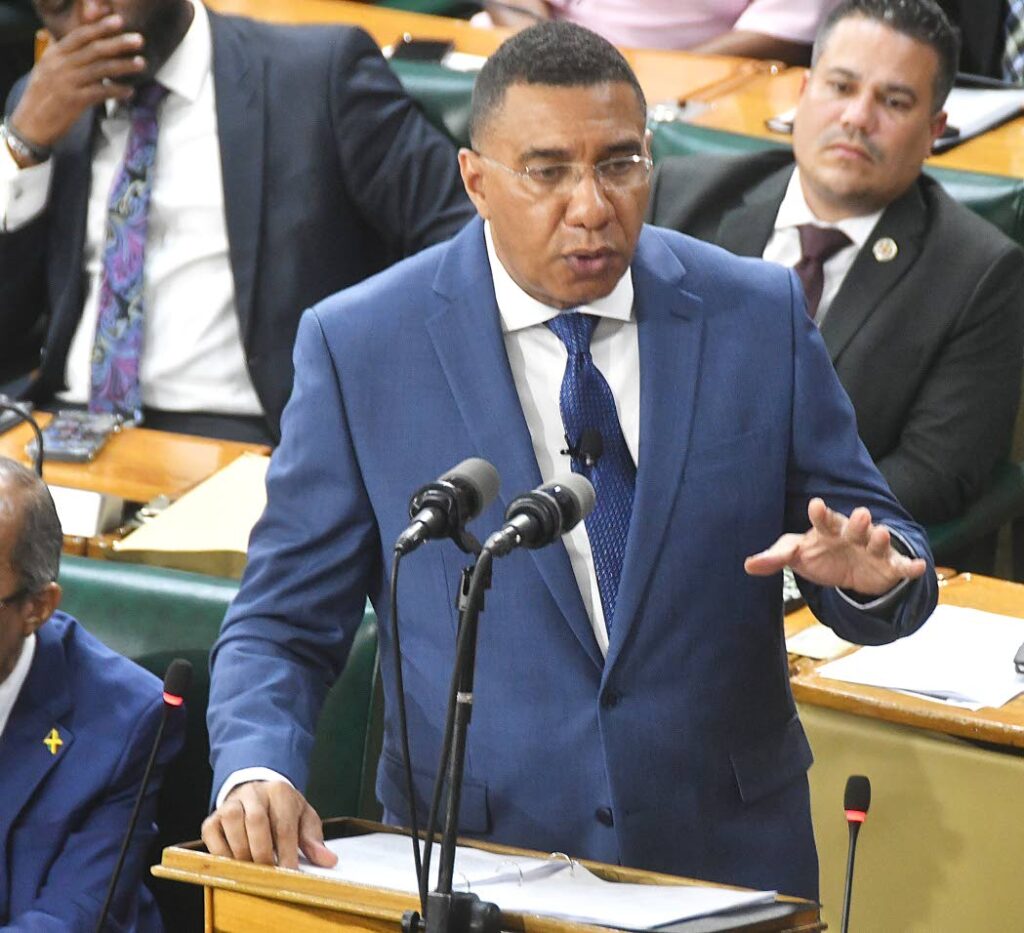
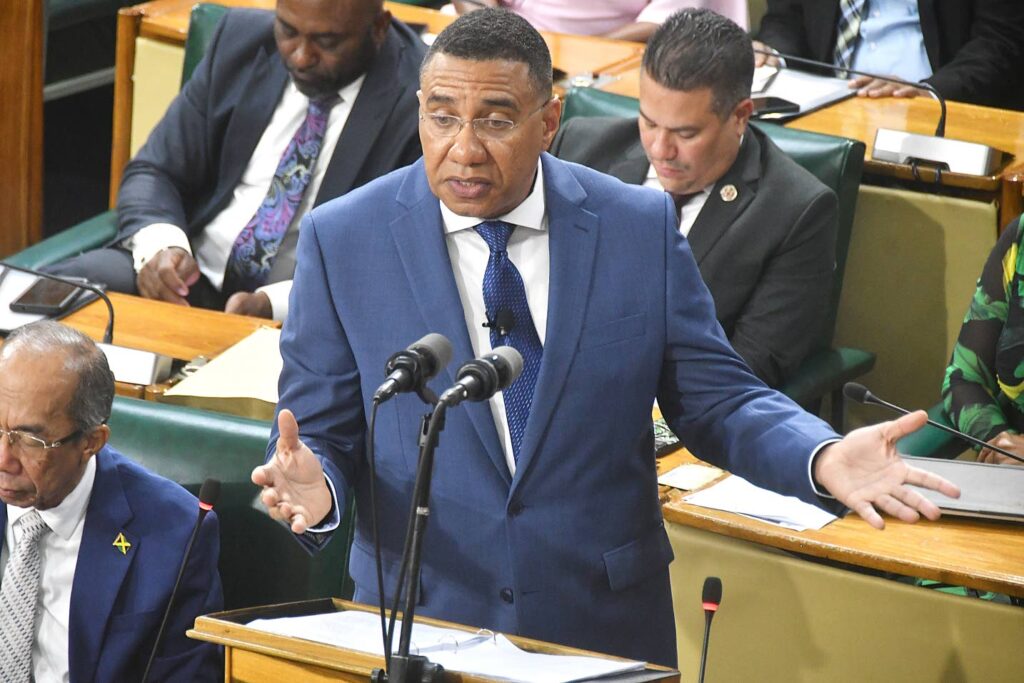
Prime Minister Dr Andrew Holness making the announcement of lower interest rates for teachers, nurses, firefighters, and members of the security and defence forces on Thursday during his contribution to the 2026/27 Budget Debate in Parliament.Photo: Garfield Robinson Latest News, News March 22,...
Prime Minister Dr Andrew Holness making the announcement of lower interest rates for teachers, nurses, firefighters, and members of the security and defence forces on Thursday during his contribution to the 2026/27 Budget Debate in Parliament.
Photo: Garfield Robinson Latest News, News March 22, 2026 Budget Debate: Holness touts new approach to unlocking urban renewal KINGSTON, Jamaica — The issue of urban renewal which has been talked about for decades is about to take on added urgency with a raft of incentives being offered by the Government, including a tax credit of up to 100 per cent for entities and individuals who are interested in restoring rundown properties.
“The new framework will strengthen the core incentive by allowing developers to apply the existing tax credit against up to 100 per cent of their income tax liability, rather than the current 50 per cent limit.
“For priority projects — including developments in severely blighted areas, affordable housing, and critical public facilities — the credit will increase from the current 33.3 per cent to 40 per cent,” said Prime Minister Dr Andrew Holness. He spoke to the issue on March 20 during his contribution to the 2026/27 Budget Debate in the House of Representatives.
According to the prime minister, “Any serious conversation about land use, productivity, and housing must confront one of Jamaica’s most visible failures in land utilisation — our blighted urban spaces”. He highlighted that across parts of downtown Kingston, Spanish Town, and Montego Bay, vacant lots and derelict buildings occupy land that should be among the most economically productive.
“These sites sit close to infrastructure, jobs, and services. The potential is not lacking — what has been lacking is the right framework to unlock it,” said Holness. He pointed out that since 1995 the Urban Renewal Tax Relief Act has attempted to incentivise investment in such areas.
“But the results have been limited — just 56 projects approved in three decades,” Holness lamented. The prime minister reminded that “Last year, I indicated that we would overhaul this framework to make it truly fit for purpose, and that work, led by the Urban Development Corporation (UDC) with key stakeholders, is now well advanced.
“Unused tax credits will also become fully transferable, allowing them to move with the property when it is sold — a change that removes a major barrier to investment and supports the develop-and-reinvest model,” he said. Holness explained that the framework will also support the wider development ecosystem. Financing for approved projects will receive tax-exempt interest income for up to eight years, commercial tenants will be able to deduct 200 per cent of rent, and first purchasers of homes in approved developments will receive a property tax exemption in their first year.
To address what the prime minister described as “one of the most persistent obstacles” — slow approvals — all permits, development approvals, and tax authorisations will be processed through a single digital portal managed by the UDC, “dramatically reducing processing time”.
“Finally, the programme will expand beyond downtown Kingston to include sections of Central Kingston, Vineyard Town, Swallowfield, and Olympic Gardens in the capital; Spanish Town and Caymanas in St Catherine; Montego Bay in St James; Port Antonio in Portland; and Morant Bay in St Thomas,” said Holness. He revealed that, “The new framework will also explicitly include disaster recovery and reconstruction areas — covering sections of Black River, Font Hill, Junction, and Santa Cruz in St Elizabeth; Whitehouse and Negril in Westmoreland and Hanover; and Falmouth in Trelawny”. He told the House that some technical and legislative work remains, but the Administration is targeting the first quarter of financial year 2026/2027 for the new urban renewal framework to begin to come into effect.
He pointed to a further incentive for redevelopment and relocation work that will need to be undertaken in Trelawny, Hanover, Westmoreland and St Elizabeth.
He said that for the next two years, the transfer tax on property will be reduced by 50 per cent.
Source Verification
Corroboration Score: 1This story was independently reported by 1 sources. Click any source to read the original article.